Time can be spent, but not refunded.
I’d like a refund please.
Reply


Condemnation by category is the lowest form of hatred, for it is cold-hearted and abstract, lacking the heat and even the courage of a personal hatred. Categorical condemnation is the hatred of the mob, which makes cowards brave. And there is nothing more fearful than a religious mob overflowing with righteousness, as there was at the crucifixion and has been before and since. This mob violence can happen only after we have made a categorical refusal of kindness to heretics, foreigners, enemies, or any other group different from ourselves.
Wendell Berry, Caught in the middle: On abortion and homosexuality
The Christian Century, March 20, 2013.
The true test of intelligence is not how much we know how to do, but how we behave when we don’t know what to do.
John Holt
How Children Fail, 1964
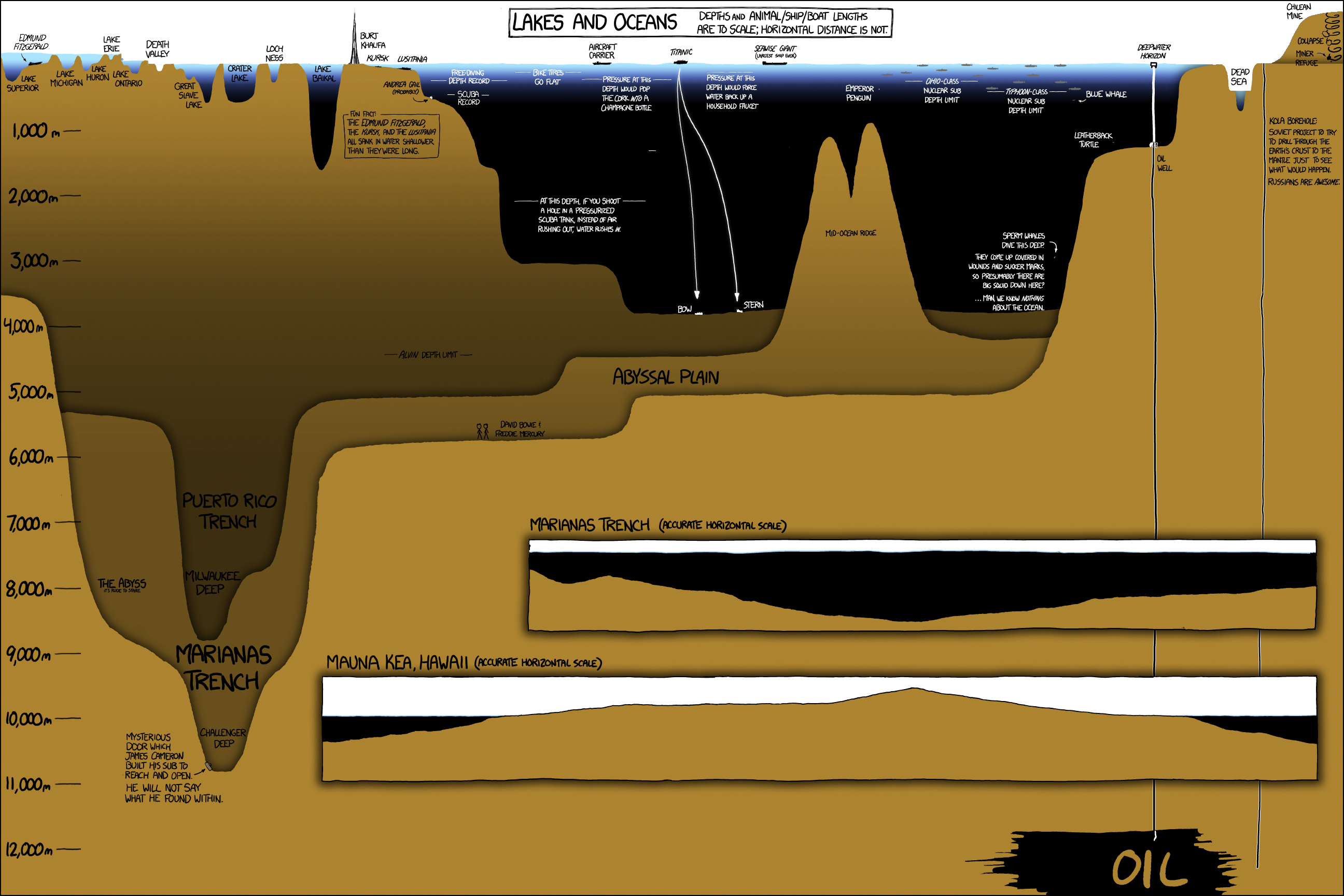
Just one of many brilliantly clear graphic explanations at: http://xkcd.com/1040/
A judge tells a condemned prisoner that he will be hanged at noon on one weekday in the following week but that the execution will be a surprise to the prisoner. He will not know the day of the hanging until the executioner knocks on his cell door at noon that day.
Having reflected on his sentence, the prisoner draws the conclusion that he will escape from the hanging. His reasoning is in several parts. He begins by concluding that the “surprise hanging” can’t be on Friday, as if he hasn’t been hanged by Thursday, there is only one day left – and so it won’t be a surprise if he’s hanged on Friday. Since the judge’s sentence stipulated that the hanging would be a surprise to him, he concludes it cannot occur on Friday.
He then reasons that the surprise hanging cannot be on Thursday either, because Friday has already been eliminated and if he hasn’t been hanged by Wednesday night, the hanging must occur on Thursday, making a Thursday hanging not a surprise either. By similar reasoning he concludes that the hanging can also not occur on Wednesday, Tuesday or Monday. Joyfully he retires to his cell confident that the hanging will not occur at all.
The next week, the executioner knocks on the prisoner’s door at noon on Wednesday — which, despite all the above, was an utter surprise to him. Everything the judge said came true.
Despite significant academic interest, there is no consensus on its precise nature and consequently – as I write this – a final ‘correct’ resolution has not yet been established.
Everything should be as simple as possible, but not simpler.
Albert Einstein, 1879-1955

 Roy Mackay